
The human foot is a masterpiece of engineering and a work of art.
Leonardo da Vinci
Verrucae
What is a verruca?
A verruca (plantar wart) is a type of skin lesion, arising from a viral infection (human papilloma virus) of the epidermis layer of the skin. They can occur on any area of the foot. When they appear on weight bearing surface they can develop an overlying callus, which can make them painful.
How can we treat a verruca?
Firstly a foot health practitioner will perform a thorough examination and history taking with regards to the verruca, including any past treatments that have been tried and taking a full medical and social history taking. Together we will decide on the most appropriate treatment for you.
Sometimes, especially in children if the verruca is not painful, no treatment is necessary. However, instances where the verruca is proving problematic, in either the form of pain or physiological distress, some of the following treatment options may be considered;
Scalpel debridement – a simple reduction in the hard skin build up over the verruca. This is not a treatment aimed at resolving the verruca, but to reduce callus associated discomfort.
Occlusion – there is some evidence to suggest that use of occlusive tape may induce an inflammatory response, to help resolve the verruca. This treatment is proving particularly successful with our younger patients.
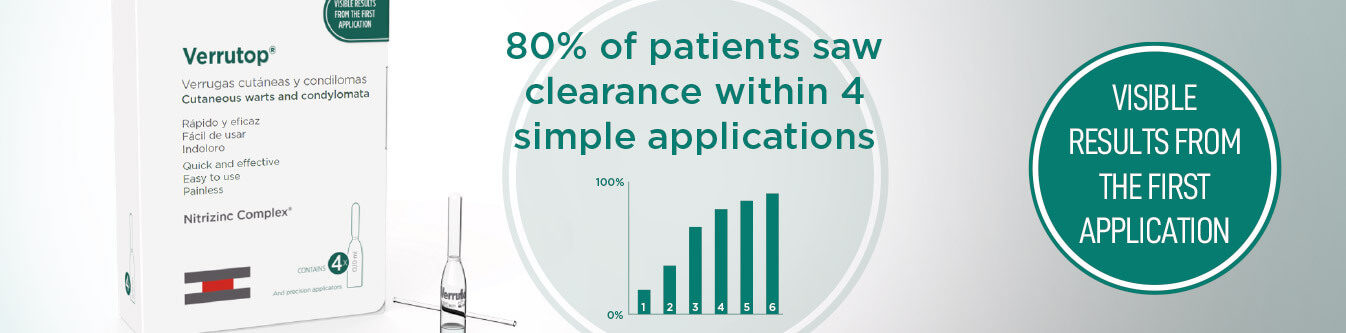
Verrutop – This new treatment is only available via foot care professionals. Unlike Cryotherapy or other chemical treatments, Verrutop does not act by freezing or burning the tissue. Instead, a chemical reaction takes place, which causes mummification of the tissue (dehydration and cellular destruction) and the verruca changes colour (white/grey/yellowish). Over time, mummification leads to the spontaneous detachment of the verruca.
Before the Verutop is applied, the verruca will be reduced with a scalpel, this is usually painless, sometimes the verruca may bleed – which is normal. It is advised to apply surgical spirits twice daily to the verruca in between treatments, which aids the drying out effect of the Verrutop. Treatments are performed every two weeks for a maximum six sessions.

How effective is it?
The manufacturers of Verrutop currently state the proven efficacy of the treatment to be 90% with a maximum of six treatment sessions performed.
What are the benefits of Verrutop?
• Quick and usually painless treatment
• No need to keep foot dry after treatment
• Can return to normal activities shortly after treatment
• Eliminates risk of spreading verruca to others
There are also various other treatments available to you by other health professionals, which we can discuss during your appointment.
Prices
New patients up to 45 mins £40 / school aged children £30
Return patients debridement only – up to 20 mins £25 / 30 mins £30
Verrutop additional £25 on top of the appointment fee